Moving in Cape Town can feel like a race against the clock. Maybe your lease ends before your new place is ready, or your property transfer is delayed by weeks. A tricky gap like this could put you and your belongings in limbo.
That’s where temporary accommodation comes in! As a tourist hotspot, Cape Town is packed with flexible temporary accommodation options. To find the perfect one that fits your budget and timeline, all you need to know is what to look for and where to look.
This guide will walk you through the benefits of temporary accommodation, the different types, where to find them, estimated costs, and how to coordinate storage. This is where a messy move starts to feel manageable.
Why temporary accommodation is useful during a move
Temporary accommodation isn’t just a backup plan. In Cape Town’s unique property market, where rentals are hard to find and prices are rising, it’s often a strategic choice that can save you in the long run.
Here are some situations where temporary accommodation can be a moving-day saving grace:
-
A gap in the lease: Your lease ends before your next one begins.
-
A gap between transfers: Your previous property transfers to new owners before the transfer of your new property goes through.
-
Delayed renovations: Your renovations are taking longer than expected, and you need somewhere to stay nearby until they’re done.
-
Competitive rental market: With the limited availability of long-term rentals in Cape Town in summer, you could opt for a short-term stay until the market opens up again.
-
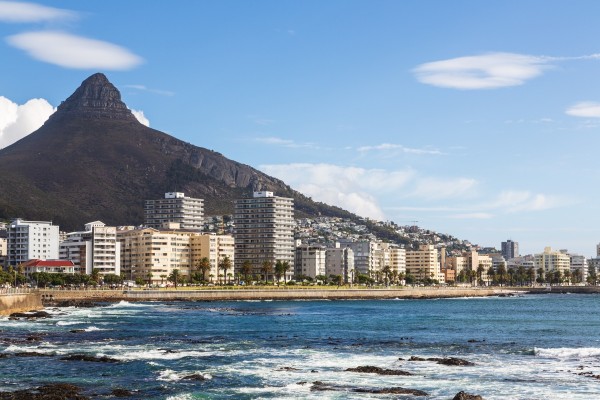
Testing a neighbourhood: Traffic and lifestyle can vary a lot (e.g., Sea Point vs Southern Suburbs); temporary stays let you test your commute and vibe before committing.
-
Pet or space considerations: A temporary solution gives you some time to sort out logistics if your new home is a different size or doesn’t allow pets.
Different types of temporary accommodation
Temporary accommodation comes in all shapes and sizes, with different lengths of stay, prices, amenities, and challenges. So whether you’re riding solo or bringing along a zoo of kids and pets, you’ll have to find out which temporary accommodation option works best for you.
1. Airbnb and short-term rentals
Airbnb-type rentals are probably the most popular option, largely because of their flexibility, variety, and accessibility.
Short-term rentals are abundant in Cape Town. So it’s quick and easy to book, and you’re sure to find one in your desired area that suits all your needs.
What it offers: Fully furnished apartments, houses, rooms, or studios bookable by the night. Diverse range across Cape Town from budget spaces to larger family homes.
Who it’s best for: Relocators, especially those from out of town, looking for a flexible option, ranging from a few days to a few months.
Things to note:
- While most listings will show their daily price, if you plan for an extended stay, you can negotiate the price with the host. This is a common practice in South Africa.
-
Expect a sharp spike in prices over peak season (Nov-Mar) and around holidays.
-
High-demand areas like Sea Point, City Bowl, and Green Point have plenty of options but also much higher prices.
-
These are usually self-catering and require you to look after the home as if it were your own.
2. Serviced apartments
Serviced apartments are the best of both worlds, sitting in between a home and a hotel. You get a fully furnished, self-contained unit, and you get housekeeping, maintenance, and reception.
What it offers: Hotel-like services with apartment-style living – kitchens, laundry, and regular cleaning.
Who it’s best for: Business travellers, remote workers, or movers wanting more structure and services than self-catering options.
Things to note:
-
It’s typically cheaper than staying at a hotel for an extended period.
-
You may get access to the building’s amenities, such as a pool, gym, security, and concierge services.
Jump ahead to discover where to find temporary accommodation in Cape Town.
3. Guesthouses and B&Bs
Guesthouses and B&Bs are a comfortable, low-commitment option when you need somewhere to land quickly during a move. You can also take advantage of having access to a local Capetonian who can give you the ins and outs of the area.
What it offers: A small, furnished room in a larger guesthouse, with breakfast possibly included.
Who it’s best for: Short stays (under 2 weeks) or those relocating with minimal belongings.
Things to note:
-
There usually isn’t a kitchen or laundry, so the food and washing costs can add up.
-
You can expect limited space, so you won’t be able to store any straggling boxes or large items.
4. Hotels and extended-stay hotels
Hotels are often the simplest solution when timing is tight and plans are still shifting. And if you want the convenience of a hotel but need to stay for a bit longer, then an extended-stay hotel could be a good option. Plus, you get some helpful extras, like a kitchenette and laundry facilities.
What it offers: A standard hotel room, plus a kitchenette for extended-stay setups.
Who it’s best for: Quick stopovers or stays while waiting for a longer booking or rental to begin.
Things to note:
How much does temporary accommodation cost in Cape Town?
Temporary accommodation in Cape Town can range from budget to luxury. So the cost will vary depending on what you’re looking for, the area, and the time of year.
Here’s a rough breakdown of how much temporary accommodation can cost in Cape Town:
-
Airbnb and other short-term rentals: Average rate is ~R1,700 per night (about R36,000 monthly on average), but can range widely.
-
Low-end holiday rental: R950-R1,500 per night in less central areas.
-
Mid-range: R1,500-R3,000 per night, typical in City Bowl or Green Point.
-
High-end holiday homes or villas: Up to R8,000-R18,000+ per night in luxury zones like Clifton.
-
Serviced apartments: Expect R18,000+ per month for decent units in central zones like CBD or Foreshore (exact rates vary widely by provider and season).
-
Guesthouses and B&Bs: Around R1,000-R2,500 per night, depending on area and services.
-
Hotels and extended-stay hotels: From R1,200-R3,000+ per night in central areas; extended-stay weekly deals may lower rates.
How to find temporary accommodation in Cape Town
While massive global short-term rental sites are available, taking a look at the local platforms and communities could help you score a temporary accommodation that’s cheaper and more flexible.
Here’s where to search for temporary accommodation in Cape Town:
-
Airbnb, Booking.com, and VRBO: International platforms with the largest selection of short-term rentals.
-
LekkeSlaap: South African platform with holiday rentals often cheaper than Airbnb and with direct connection to local hosts.
-
Cape Town Holiday Apartments: A local provider of fully furnished self-catering apartments across the City Centre, Atlantic Seaboard, Bloubergstrand, and Century City.
-
Cape Town Getaways: A Cape Town-based platform listing self-catering apartments, houses and cottages for short stays across the city and surrounds.
-
Cape Town Hotel Search: A hotel reservation site that lets you compare and book from hundreds of Cape Town hotels and serviced apartments in one place.
-
Facebook groups: Sift through daily listings or post your own listing requesting exactly what you are looking for.
-
Property websites: Property24 and Private Property allow you to filter for short-term rentals by selecting the daily rental prices (note that they’re on the expensive side).
Coordinating temporary accommodation with storage
 Temporary accommodation almost always comes fully furnished. So if you’re stuck in a moving limbo, what do you do with all your stuff?
The answer: storage.
Storage allows you to put all your belongings safely away until you’re ready to move into your new home. This way, you only have to worry about carting around your clothes and the essentials.
If you’re downsizing, you can even choose to leave some belongings in storage until you have time to deal with them or if you plan to upsize again in the future.
Popular storage facilities in Cape Town
The larger storage companies will have multiple facilities across the city, allowing you to choose the one that’s nearest to you or that suits your budget.
Here are some of the larger storage companies in Cape Town:
Tips to book and coordinate storage with temporary accommodation
-
Book storage as soon as possible: Cape Town storage facilities can fill up quickly, especially in summer.
-
Choose a storage location that makes logistical sense: If your temporary accommodation is in the CBD, storing your belongings in the southern suburbs means extra transport time and cost when accessing items.
-
Compare storage providers, not just prices: Stor-age, for example, has many locations near major routes, which can be useful if you expect to access your items often during your temporary stay.
-
Check if your mover offers storage: Some moving companies can store your belongings and deliver them later, reducing coordination and extra handling.
Need a trusted, affordable moving service?
 When you’re doing a complicated staged move with so many moving parts, you’ll want only the best moving team by your side.
Wise Move is the easiest way to book trusted local movers to help with logistics, timing, and storage coordination, so you can focus on settling in and enjoying your new chapter.





 Temporary accommodation almost always comes fully furnished. So if you’re stuck in a moving limbo, what do you do with all your stuff?
 When you’re doing a complicated staged move with so many moving parts, you’ll want only the best moving team by your side.